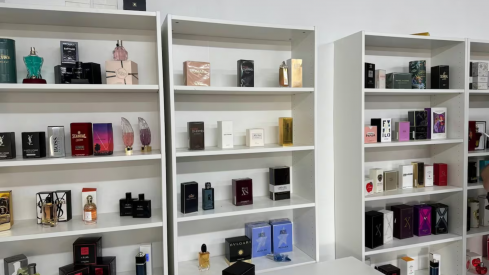
Catalan and state authorities have dealt a historic blow to the counterfeiting market on the continent. In a large-scale joint operation, the Mossos d’Esquadra and the Servicio de Vigilancia Aduanera of the Tax Agency have managed to locate and shut down a mass production network of fragrances that operated from the province of Girona. According to official reports, the plant had an estimated manufacturing capacity of four million bottles annually, a figure that positions it as the most powerful infrastructure of its kind discovered to date on European soil.
An industrial logistics at the service of fraud
The operations center of this criminal network was not limited to a simple labeling warehouse; it was a fully operational factory located in the region of La Selva, specifically between the towns of Fogars de la Selva and Arbúcies. The organization had set up a business structure that, outwardly, pretended to be legitimately involved in cosmetics and drugstore products, which allowed them to move large volumes of alcohol and chemical components without raising immediate suspicion.
Inside the warehouses, agents found seven automated production lines. The group's sophistication was such that they were not only in charge of filling the containers, but they managed the entire product lifecycle: from the mixing of chemical elixirs in large 150,000-liter tanks, to the complex packaging process, which included protective cellophane and security labels to perfectly imitate more than 50 luxury brands.
Figures of a millionaire business
The magnitude of the seizure yields data that show the enormous economic impact of this network. During the search, the police seized:
-
1.2 million units of perfume finished and ready for transport.
-
Material and product valued at approximately 94 million euros, if it had been sold at the price of the original brands.
-
State-of-the-art industrial machinery valued at hundreds of thousands of euros.
The investigation was triggered after the detection of several suspicious transports at the French border. After months of surveillance, it was confirmed that the destination of this merchandise was not the local market, but a distribution network that supplied countries such as Italy, Germany, Romania, and Poland.
Arrests and risks for the consumer
Up to now, the operation has resulted in the detention of seven people directly linked to the management of the warehouses, in addition to a dozen investigated. However, the case remains under summary secrecy while investigators try to locate the financial "brains" of the plot, who are suspected of operating from other points in the Spanish geography.
Beyond economic fraud and the violation of industrial property, authorities have emphasized the risk to public health. As they are manufactured in environments without sanitary controls or supervision by toxicology experts, the use of these imitation perfumes can cause severe allergic reactions or dermatological problems in consumers, who often acquire these products through unofficial sales channels believing they are original stock surpluses.