
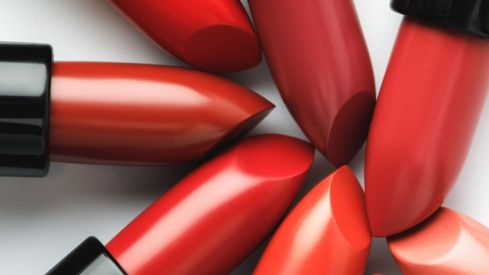
It has been some time now since the expression known as ‘Lipstick effect’ became popular. This phenomenon, which you have surely already read about on numerous occasions, says nothing more than that before situations of global economic uncertainty we seek to satisfy ‘small needs’. And these ‘small needs’ are translated, mainly, into cosmetics, and hence, the name ‘lipstick effect’.
This term was coined by Leonard Lauder, yes, from the Estée Lauder empire in 2001 when the United States was experiencing a period of economic recession due to the dot-com bubble crisis and which is remembered as one of the most impactful financial crisis periods in recent times. Curiously, Leonard Lauder observed an increase in lipstick sales despite the fact that the US economy was going through a critical moment and pointed to a social behavior that is still applicable today: in situations of uncertainty, we give up large expenditures, but we exchange them for small whims or acquisitions that make us feel good or provoke a feeling of comfort.
And as history is condemned to repeat itself and it seems to be something cyclical, that is precisely what is happening now. According to NielsenIQ, the beauty sector has once again consolidated itself as one of the most resilient engines of the market and its sales registered a growth of more than 7% in 2025 and it is expected to continue growing in 2026 by almost 6%.
As indicated by Europa Press, the latest report from Bank of America, the revenues of 26 large listed companies in the beauty sector grew almost 4% year-on-year in the last quarter of 2025. The same report forecasts that this behavior will extend to the data for this first quarter of 2026 and that the demand for beauty products will accelerate slightly. At a European level, the document indicates that the European market also increased its spending in the last quarter of 2025 more than expected.
In Spain, the personal care section, which encompasses the categories of perfumery and hygiene, was the most dynamic in growth in last year's shopping basket. The categories that grow the most here in Spain, according to NielsenIQ, are fragrances, hair care, and skin care.
Something that fits perfectly with what Leonard Lauder explained is that luxury facial beauty has lost relevance and the consumer bets on and prefers more accessible brands and small formats, which confirms that in times of uncertainty consumers also give up luxury cosmetics.
Puig: one of the companies most benefited from the lipstick effect
In the BofA report appears a name that is familiar to the Spanish industry: Puig. And it is that Puig, according to Bank of America, is one of the biggest beneficiaries of the lipstick effect sector along with the Chinese group Yatsen, the Indian company Honasa and the Swiss Galderma, as reported by Europa Press.
At Puig, the ‘Fragrances and Fashion’ division accounted for 72% of the company's turnover in 2025, with 3,646 million euros, 6.4% more than the previous year. As for the ‘Makeup’ segment, it reached 17% of sales, driven mainly by Charlotte Tilbury, and in ‘Skincare’ it invoiced more than 551 million euros.
The beauty sector does not simply sell products; it sells identity, comfort, and confidence. Although clouds of uncertainty threaten quarterly balances, the resilience of this industry lies in its emotional root. In times of crisis, the ritual of self-care ceases to be a luxury to become an act of personal resistance. Because, no matter what happens outside, the human desire to feel good in one's own skin is, and always will be, non-negotiable.
