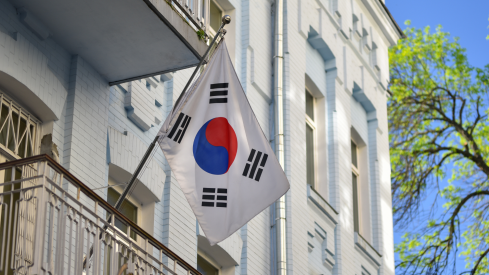
K-Beauty enters a new stage. The South Korean Parliament has approved a new Law for the Promotion and Support of the Cosmetic Industry, with which the Government intends to consolidate the country's position as a global beauty power and provide greater support to companies seeking to grow outside its borders.
The approval took place on August 20 and represents a significant change in the sector's industrial policy. Until now, South Korean cosmetic legislation had focused mainly on aspects related to product safety and quality. The new regulation incorporates for the first time a specific framework to boost the economic development of the entire cosmetic value chain.
The objective is to cover a much broader spectrum: from research and development of new products to manufacturing, ingredients, packaging, distribution, and export. In other words, the Government seeks to strengthen not only brands but also the industrial ecosystem behind K-Beauty.
A national strategy every five years
One of the main elements of the new law will be the creation of a comprehensive development plan for the cosmetic industry every five years. This mechanism will allow establishing medium and long-term priorities and coordinating public policies aimed at the sector.
The regulation also introduces a certification system for innovative cosmetic companies. Companies that meet the established criteria will be able to access specific support measures, with special attention to small and medium-sized enterprises and mid-sized companies.
The commitment is especially significant considering the weight these companies have in the international expansion of K-Beauty. According to the South Korean Government, cosmetics have become the main export product among the country's SMEs.
Export, at the center of the strategy
The decision comes at a time of strong international expansion for Korean cosmetics. South Korea closed 2025 with 11.4 billion dollars in cosmetic exports, an all-time high and a figure that positioned the country as the second largest global exporter in the sector.
Furthermore, growth no longer depends exclusively on traditional K-Beauty markets. The Government has been highlighting for months the diversification of export destinations towards Europe, the Middle East, and Latin America, in addition to the United States and Japan. In 2024, cosmetic exports reached 10.2 billion dollars, and by October 2025, they had already reached 9.42 billion, an 11.9% increase compared to the same period of the previous year.
This international expansion is also changing the profile of the companies leading the K-Beauty phenomenon. Alongside large Korean groups, more and more independent brands and smaller companies are using cross-border e-commerce and social media to directly access international consumers.
More support to compete in markets like Europe
The new legislation also comes in a context where Korean companies have to adapt to an increasingly complex international regulatory environment.
Last July, South Korea raised several regulatory difficulties affecting its exporters at the World Trade Organization, including certain European regulations related to packaging and packaging waste, single-use plastics, and PFAS. The South Korean government specifically pointed out the potential impact of these regulations on cosmetic exporters.
Therefore, the new legislative framework can also become a tool to facilitate companies' adaptation to the different requirements of international markets. The Government's intention is that support does not end when a product leaves the factory, but rather accompanies companies throughout the internationalization process.
From cultural phenomenon to strategic industry
The approval of this law confirms the extent to which K-Beauty has ceased to be merely a consumer trend to become a strategic asset for the South Korean economy.
The country is trying to build an ecosystem around cosmetics that combines innovation, technology, manufacturing, brands, raw materials, packaging, and distribution. A particularly relevant strategy at a time when Korean beauty continues to gain market share in international markets and when brands seek to differentiate themselves through innovation, launch speed, and formats increasingly adapted to new consumption dynamics.
The new legislation must now be developed through the specific support measures planned by the Government. Its entry into force is scheduled one year after its promulgation, so the next step will be to know how this new system of aid is articulated and which companies will be able to benefit from it.