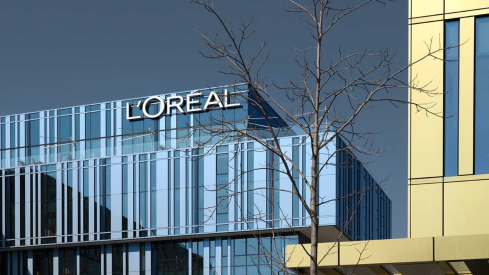
The French giant L’Oréal has filed a lawsuit before the U.S. Court of International Trade to claim the refund of tariffs it paid under the trade policy promoted by the current president of the United States Donald Trump. The legal action was filed by its division L’Oréal Travel Retail Americas and seeks to recover amounts paid under the levies applied to imported products.
The move comes after the Supreme Court of the United States determined that a large part of those tariffs were illegally imposed, considering that the White House improperly used the International Emergency Economic Powers Act (IEEPA), a rule designed for very specific economic emergencies. The ruling has opened the door to a wave of business claims that could reach multi-million dollar figures.
L'Oréal is not alone. Other international companies like Dyson and Sol de Janeiro have also filed lawsuits to recover paid tariffs. Collectively, more than 1,400 importers have joined this legal battle, which could translate into billions of dollars in refunds if the courts rule in their favor.
For the beauty sector, the impact goes beyond the legal. Tariffs affected both finished products and raw materials, packaging and technological components, pressuring brands' margins and making certain items more expensive in the U.S. market. If refunds materialize, companies could alleviate costs and strengthen investment in innovation, marketing or international expansion.
However, the scenario is not entirely stable. After the court ruling, the Trump administration has announced new tariffs under different legal frameworks, which maintains regulatory uncertainty. This forces companies to rethink their supply and production strategies, diversifying markets and reducing dependence on trade routes vulnerable to political decisions.
The L’Oréal lawsuit marks a turning point: large corporations no longer passively assume extraordinary commercial measures.