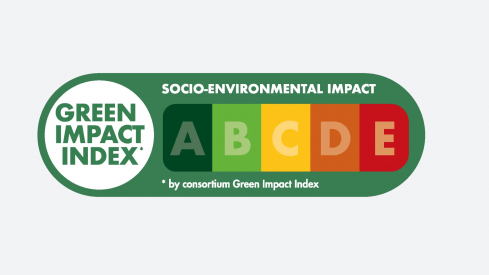
Sustainability stopped being a trend to become a fundamental requirement in the cosmetic industry. Consumers look for products that take care of their skin, respect the planet, and are responsible towards people. But how to measure if a product truly meets these standards? The answer is the Green Impact Index, a tool that allows evaluating, managing, and communicating the environmental and social impact of cosmetic products in a clear, objective, and professional manner.
What is the Green Impact Index?
The Green Impact Index is a comprehensive evaluation system that measures the sustainability of cosmetic products throughout their entire life cycle: from the selection of raw materials to the management of their end-of-life.
The Green Impact Index combines environmental, social, and ethical criteria in a single index, offering a global score that allows brands:
- Identify opportunities for improvement.
- Compare products objectively.
- Communicate transparently their progress in sustainability.
How sustainability is measured
The Green Impact Index is based on five key dimensions:
1. Raw materials
- Origin and traceability: Natural, certified organic, and from responsible sources.
- Environmental impact: Water footprint, energy consumption, and biodegradability.
- Social impact: Fair trade and respect for biodiversity.
2. Manufacturing processes
- Energy consumption and CO₂ emissions
- Waste management: Reduction, reuse, and recycling.
- Chemical safety: Assessment of the impact of compounds on people and ecosystems.
3. Packaging and packing
- Recyclable or biodegradable materials (glass, biopolymers, responsible plastics)
- Eco-efficient design: Reduction of weight and volume, optimization of transport.
- Circular economy: Refill systems, return and reuse.
4. Transport and logistics
- Carbon footprint of transport
- Route optimization to reduce emissions.
5. Social and ethical impact
- Safe and fair labor conditions
- Inclusion and equity in the supply chain
- Commitment to biodiversity and prohibition of animal testing
Strategic Benefits of the Green Impact Index
- Transparency and trust: Allows communicating results in a clear and verifiable manner.
- Operational efficiency and savings: Identifies critical points to reduce energy, water, and waste.
- Responsible innovation: Drives new formulas, packaging, and more sustainable processes.
- Compliance and certification: Facilitates alignment with international regulations and standards, including Ecocert certifications.
Trusting in a control and certification body will help you obtain:
- Technical rigor: Verifiable data and clear metrics.
- Accessibility: Understandable information for specialists and consumers.
- Strategic value: Allows differentiating the brand and demonstrating commitment to the planet and people.
Adopting the Green Impact Index means going beyond green marketing: it is a tangible commitment to sustainability, ethics, and innovation. In a market where transparency is key, the Green Impact Index becomes a competitive differentiator that demonstrates that beauty can be ethical, responsible, and profitable.