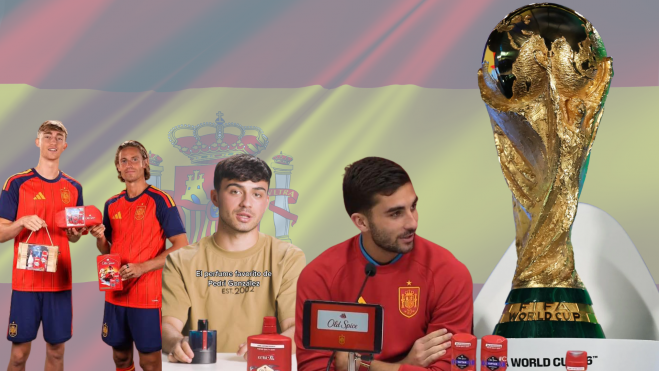
Last Sunday in New York, Spain touched the sky again by being crowned world champion 16 years later. It was the icing on the cake for Luis de la Fuente's team, which established itself at the top of football after defeating Scaloni's and Messi's Argentina, unable to neutralize the push and dominance of La Roja, which decided to speak with the ball at their feet and take action.
With this feat, the national team jerseys with a single star officially become vintage pieces that we will keep in our closet, longing for the vuvuzelas of South Africa from that first star achieved in 2010. On the Adidas website, the new model featuring the two stars has already completely sold out, a distinction that places Spain in a select echelon of historical achievements, tied with powers like France (the Gauls, ahead of Spain with two runner-up finishes).
A team that has not peaked
The most promising thing is that this team does not seem to have peaked. With an average age of just 26.1 years, and a starting eleven in the final of 26.3, the Spanish National Team becomes one of the youngest in recent decades.
Now, what can the success of the Spanish National Team have in common with the national cosmetic sector? An unstoppable future projection.
A sector that already accounts for more than 1% of GDP
The data published in 2025 by Stanpa already hints at the importance of the cosmetic and perfumery sector in Spain with an indicator such as GDP. Our industry contributes more than 1% of Spanish GDP and reached a market value of 11,818 million euros, almost 6% more than the previous year and 44.3% more in the last five years. With these data, the cosmetic sector stands within the country's economy as one of the most dynamic and fastest-growing sectors of the national economy.
Spain is also one of the countries where the most beauty and personal care products are consumed in the world, and is among the main countries in Europe. The average expenditure per inhabitant in Spain exceeds 230 euros per year, well above the European Union average, which is close to 185 euros per year.
A business fabric of SMEs and specialized laboratories
The business fabric of the Spanish cosmetic sector stands out for a large network of SMEs and specialized laboratories. More than 400 manufacturing and distribution companies operate in the ecosystem with more than 250 production and analysis laboratories. In addition, it is one of the most dynamic sectors in the manufacturing and industrial field and, on average, between 15 and 30 new companies, cosmetic brands and niche laboratories are born each year, according to an estimate by the National Institute of Statistics. Close to 84% of the companies that are part of our industry are SMEs and micro-enterprises.
In terms of job creation, the cosmetic, perfumery and personal care sector directly and indirectly creates employment for more than 300,000 people and is also one of those that most ensures gender equality, with 53% of management positions occupied by women. It also stands out for being a sector with a high presence of qualified profiles: 21% of employment in the industry corresponds to scientific profiles, such as chemists, pharmacists or biologists.
R&D at the level of high technology
In terms of R&D, the Spanish cosmetic sector allocates between 3.4% and 4% of its turnover to Research, Development and Innovation (R&D&I). This data positions the Spanish cosmetic sector at the level of high-tech sectors and above Spanish industry in general, which is around 1.2%. Spain also ranks in the Top 5 in patents and scientific publications applied to dermocosmetics in Europe, especially in plant and marine biotechnology, photoprotection and knowledge ecosystem, according to the European Patent Office (EPO) and the Spanish Patent and Trademark Office (OEPM) in specific subsectors such as sunscreens, textures and cosmetics with biotechnological principles.
A country brand that also triumphs abroad
And it is that, just as the Spanish National Team these days monopolizes major international media headlines, Spanish cosmetics are recognized worldwide: "Made in Spain" cosmetic and personal care products are not only sold in the European Union, since their main growth markets outside the continent are the United States, Mexico, the United Arab Emirates and Asia-Pacific.
The star ingredients of the Spanish routine
Among the 'star players' of any skincare routine, Spaniards are clear about what they consider indispensable:
- Niacinamide (vitamin B3): the ingredient that has experienced the biggest peak in searches and interest in Spain.
- Retinol and retinoids: the undisputed king in the anti-aging category. Given that concern for photoaging is high in Spain, the stimulation of collagen and cell renewal offered by retinol continues to lead sales.
- Vitamin C: has become the preferred antioxidant in the national market. Spanish consumers also seek the much-desired 'glow' and the appearance of healthy skin.
- Hyaluronic acid: a classic of high-tolerance hydration. It is the active ingredient par excellence, the most recognized by consumers, and maintains skin hydration and elasticity.
- Ceramides and alpha/beta hydroxy acids (AHA/BHA): in recent years, interest in caring for the skin barrier (ceramides) and in chemical exfoliation to improve pore texture has grown strongly.
Brands, especially for men's cosmetics, have sometimes relied on top-level athletes. This is the case of Ferrán Torres with Old Spice, who is a brand ambassador with a locker room colleague in the national team like Marcos Llorente, or Rafa Nadal, ambassador for CantabriaLabs' Heliocare solar range. La Roche Possay has also managed to ally with the Spanish national football team or Rilastil, which became a sponsor of the Barça Femenino first team.
Between the second star sewn onto the shirt and an industry that is growing at double digits in just five years, Spain confirms that it is competitive both in the sports field and in innovation and cosmetics.